Kenntnisprüfung and Anpassungslehrgang for Nurses – What the Exam Looks Like and How to Choose Your Path
Most nurses and healthcare technicians from the Western Balkans receive a decision of partial recognition of their diploma: the German assessment board determines that there are "material differences" (wesentliche Unterschiede) between their training and the German three-year nursing education — typically in areas such as psychiatric care, geriatrics, paediatrics, or care planning. To obtain full professional authorisation (Urkunde, Berufsurkunde), these gaps must be addressed through one of two measures. The choice is yours, not your employer's.
Path 1: Kenntnisprüfung – Knowledge Exam
The exam verifies whether your knowledge meets the standard of the German final qualifying exam for Pflegefachfrau/-mann. It consists of two parts:
- Oral section (45 to 60 minutes): before an examining board (a nursing school teacher, a senior nurse from practice, and often a doctor), you are presented with a complex patient case and asked to walk through the care process — assessment, planning, interventions, and evaluation — while answering questions on anatomy, pharmacology, hygiene, law, and ethics. The exam is conducted entirely in German, with no dictionary permitted.
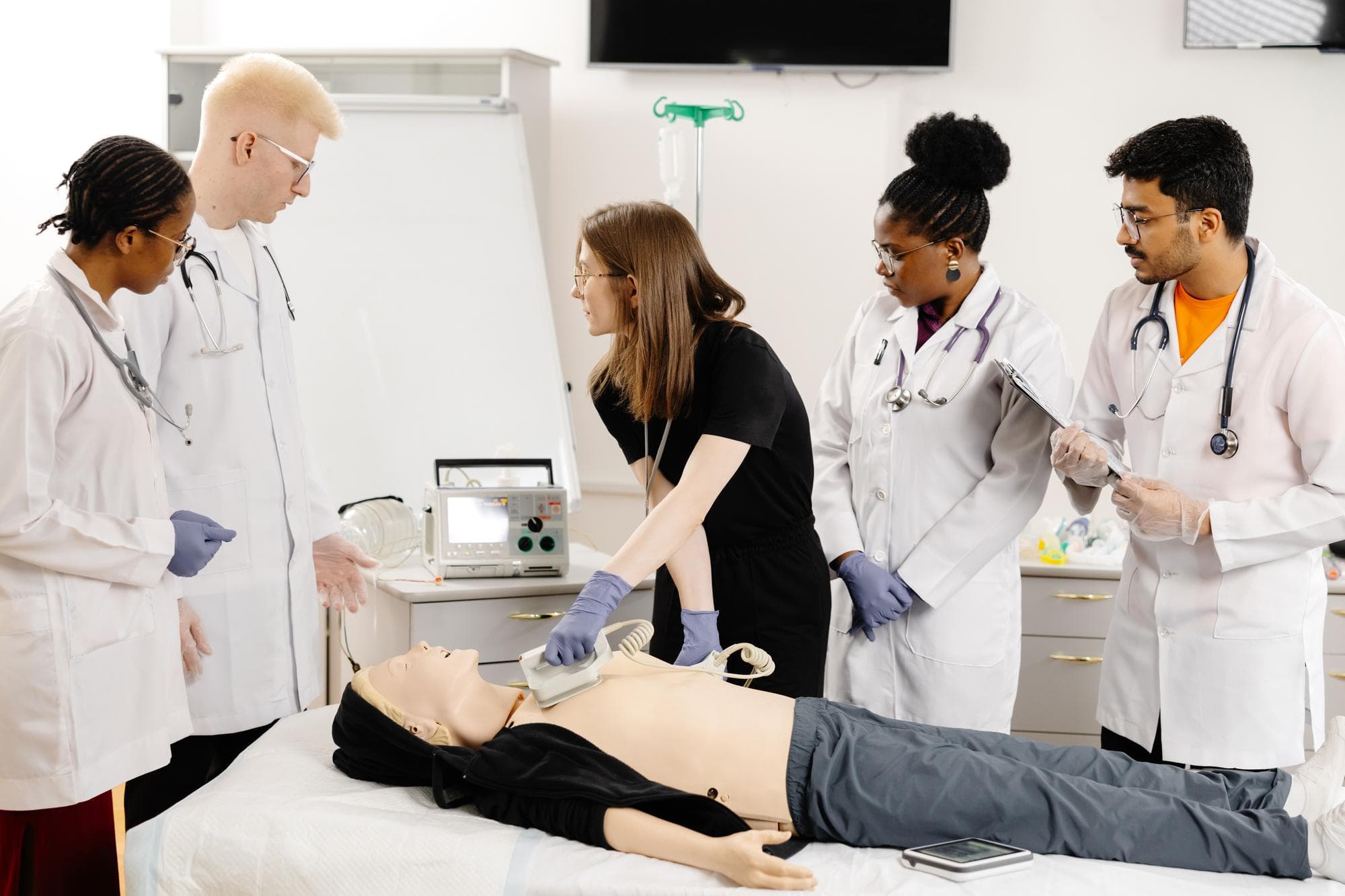
- Practical section (60 to 120 minutes): in a hospital or care facility, you take responsibility for one or two patients, plan and carry out their care in front of the board, and explain your decisions as you go. You are assessed on clinical competence, safety, communication, and documentation.
The exam is organised by accredited nursing schools or hospitals in coordination with the relevant authority. It may be retaken up to two times. The examination fee ranges from €300 to €900, and preparatory courses — typically lasting 4 to 12 weeks, usually undertaken alongside work — cost between €1,000 and €3,000, which hospitals generally cover. With thorough preparation, pass rates are high; without it, candidates most often fail on the language requirements and on the German nursing process model, not on clinical knowledge itself.
Path 2: Anpassungslehrgang – Adaptation Programme
Instead of sitting an exam, you work under supervision and attend theoretical instruction in the specific areas identified as gaps in your recognition decision. The duration is set by the decision itself: typically 6 to 12 months (6 months is standard in Berlin), with a legal maximum of three years. The programme combines a practical component — rotations through departments covering the required areas, such as psychiatry or geriatrics — with several hundred hours of theoretical instruction at a nursing school. It concludes with a final review meeting (Abschlussgespräch), which is not a formal exam in the strict sense: if you have completed the programme consistently and your mentor is satisfied, you receive a confirmation of completion.
The advantage of this path is less pressure and more time to develop your language skills; the downside is a longer wait for full pay and a dependence on the institution being able to provide all the required rotations.
How to Choose Your Path
- You have a solid command of German (B2 or above), several years of experience, and an employer who will cover preparation costs → Kenntnisprüfung: faster, typically completed within two to four months of arrival.
- You have recently arrived, your German is at B2 but lacks fluency in practice, and your recognition decision identifies three or more areas of difference → Anpassungslehrgang: the safer option.
- In some federal states, the competent authority may recommend a specific measure; you are entitled to request the alternative. Your employer cannot force you into a particular path, but in practice they will offer what they can organise — ask before signing your contract what the employer actually provides.
What You Do While the Measure Is in Progress
You work as auxiliary nursing staff under supervision, under a qualification recognition permit (§ 16d of the Residence Act), at a lower pay grade — typically P 5 or P 6 under TVöD. Once you receive full recognition, you move to P 7 or P 8, generally from the month in which your Urkunde is issued — make sure this is stated in your contract. For more on this, see our article Employment Contracts in Germany.
Preparation That Pays Off
- Learn the German nursing process model (Pflegeprozess, 6 steps) and frameworks such as ABEDL and Bobath — these are the reference points examiners use.
- Practise verbalising your clinical reasoning: "Ich mache das, weil…" The board is assessing your understanding, not your speed.
- Familiarise yourself with ward documentation and common abbreviations.
- Take advantage of any preparatory courses offered by the nursing school or hospital, and ask for a mock exam.
- Don't delay: the measure must be completed while your residence permit for the recognition process is still valid (maximum three years).
For a full overview of the recognition process by federal state — including the relevant authority and required documents — visit our Anerkennung guide. Frequently asked questions are covered in our article Diploma Recognition in Germany.
Sources: Pflegeberufegesetz (§ 40–41), Pflegeberufe-Ausbildungs- und Prüfungsverordnung (§ 45), anerkennung-in-deutschland.de, competent authorities in Berlin (LAGeSo) and Bavaria.
We help every candidate we place choose the right path and work exclusively with employers who cover preparation costs and facilitate the examination process. Find out how we work.
Is your diploma recognised in Germany?
Three questions — and you get a recognition estimate and the exact route to a job for your country and profession.
Fill in the short application — we'll get back to you with a concrete plan for your situation. Apply now →